Memes Yhat Will Give You an Anurism Trying to Read
Cerebral Aneurysm
What Yous Demand to Know
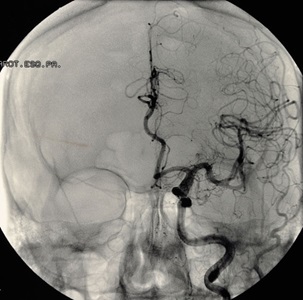
- A encephalon aneurysm (besides called a cerebral aneurysm or an intracranial aneurysm) is a ballooning arising from a weakened area in the wall of a blood vessel in the brain.
- If the brain aneurysm expands and the blood vessel wall becomes too thin, the aneurysm will rupture and bleed into the infinite around the brain. This issue is called a subarachnoid hemorrhage (SAH) and may crusade a hemorrhagic (bleeding) stroke.
- Rupturing brain aneurysm and SAH are life-threatening events. If you doubtable y'all are having a rupturing encephalon aneurysm, telephone call 911.
What are the symptoms of brain aneurysm?
The presence of a encephalon aneurysm may non be known until information technology ruptures. Most encephalon aneurysms accept no symptoms and are small-scale in size (less than ten millimeters, or less than 4-tenths of an inch, in diameter). Smaller aneurysms may have a lower risk of rupture.
However, occasionally there may exist symptoms that happen before a rupture due to a small amount of blood that may leak. This is called "sentry hemorrhage" into the brain. Some aneurysms are symptomatic because they press on adjacent structures, such as nerves to the center. They can cause visual loss or diminished middle movements, even if the aneurysm has not ruptured.
The symptoms of an unruptured brain aneurysm include the post-obit:
-
Headaches (rare, if unruptured)
-
Middle pain
-
Vision changes
-
Macerated middle movement
The first evidence of a brain aneurysm is most often a subarachnoid hemorrhage (SAH), due to rupture of the aneurysm. This may crusade symptoms such equally:
-
Rapid onset of "worst headache of my life"
-
Stiff neck
-
Nausea and vomiting
-
Changes in mental status, such as drowsiness
-
Pain in specific areas, such as the eyes
-
Dilated pupils
-
Loss of consciousness
-
High claret pressure
-
Loss of residue or coordination
-
Sensitivity to light
-
Back or leg pain
-
Problems with certain functions of the optics, olfactory organ, tongue, and/or ears that are controlled past ane or more of the 12 cranial fretfulness
-
Coma and death
The symptoms of a brain aneurysm may resemble other problems or medical conditions. Always talk with your healthcare provider for a diagnosis.

Brain Aneurysm | Laurie Jean's Story
Laurie Jean Cannady learned at a young historic period that when life is hard, at that place are e'er options to assistance overcome troubles. When she faced surgery for a brain aneurysm, information technology felt like more than than she could handle. Just she found the options she needed, cheers to an innovative new procedure. Read her story.
What are the take a chance factors for brain aneurysm?
Inherited risk factors associated with aneurysm formation may include the post-obit:
-
Alpha-glucosidase deficiency.A complete or fractional deficiency of the enzyme needed to suspension down glycogen and to catechumen information technology into glucose.
-
Alpha 1-antitrypsin deficiency.A hereditary illness that may pb to hepatitis and cirrhosis of the liver or emphysema of the lungs.
-
Arteriovenous malformation (AVM). An aberrant connection between an artery and a vein.
-
Coarctation of the aorta.A narrowing of the aorta. This is the main artery coming from the heart.
-
Ehlers-Danlos syndrome. A connective tissue disorder (less common).
-
Family history of aneurysms
-
Female gender
-
Fibromuscular dysplasia.An arterial disease, cause unknown, that about often affects the medium and large arteries of young to middle-aged women.
-
Hereditary hemorrhagic telangiectasia. A genetic disorder of the blood vessels in which there is a tendency to form claret vessels that lack capillaries between an artery and vein.
-
Klinefelter syndrome.A genetic condition in men in which an extra X sexual practice chromosome is present.
-
Noonan'south syndrome.A genetic disorder that causes abnormal evolution of many parts and systems of the body.
-
Polycystic kidney disease (PCKD).A genetic disorder characterized by the growth of numerous cysts filled with fluid in the kidneys. PCKD is the most mutual medical illness associated with saccular aneurysms.
-
Tuberous sclerosis.A type of neurocutaneous syndrome that can cause tumors to grow inside the encephalon, spinal cord, organs, skin, and skeletal bones.
Acquired risk factors associated with aneurysm germination may include the post-obit:
-
Advancing historic period
-
Alcohol consumption (specially binge drinking)
-
Atherosclerosis. A buildup of plaque (made up of deposits of fatty substances, cholesterol, cellular waste products, calcium, and fibrin) in the inner lining of an artery
-
Cigarette smoking
-
Use of illicit drugs, such every bit cocaine or amphetamine
-
High blood pressure level
-
Head injury
-
Infection
Although these risk factors increase a person's risk, they do non necessarily cause the disease. Some people with one or more adventure factors never develop the affliction, while others develop disease and have no known adventure factors. Knowing your risk factors to any disease can help to guide you into the appropriate actions. These include irresolute behaviors and existence monitored for the disease.

Brain Aneurysm | Brianna's Story
California teenager Brianna Atkins faced the reality of a life-threatening brain aneurysm with little hope for treatment options. Neurosurgeon Alexander Coon, M.D., drew upon his expertise to provide a unique method for treatment. He used an innovative, minimally invasive flow diversion approach that gave Brianna the chance to lead a normal life.
Brain Aneurysm Diagnosis
A encephalon aneurysm is often discovered afterwards it has ruptured or past chance during diagnostic exam, such as computed tomography (CT scan), magnetic resonance imaging (MRI), or angiography that are being washed for other reasons.
In addition to a complete medical history and physical test, diagnostic procedures for a brain aneurysm may include:
-
Cognitive angiography. This provides an image of the blood vessels in the brain to detect a trouble with vessels and claret flow. The procedure involves inserting a catheter (a small, sparse tube) into an artery in the leg and passing it up to the blood vessels in the brain. Contrast dye is injected through the catheter and X-ray images are taken of the blood vessels.
-
Computed tomography scan (CT or CAT scan).This is an imaging test that uses X-rays and a computer to brand detailed images of the body. A CT scan shows details of the basic, muscles, fat, and organs. CT scans are more detailed than general X-rays and may be used to detect abnormalities and help identify the location of the aneurysm and if it has burst or is leaking. A CT angiogram (CTA) can also be obtained on a CT scan to wait at the vessels.
-
Magnetic resonance imaging (MRI).A diagnostic procedure that uses a combination of large magnets, radiofrequencies, and a computer to produce detailed images of organs and structures within the body. An MRI uses magnetic fields to detect pocket-size changes in brain tissue that assist to locate and diagnose an aneurysm.
-
Magnetic resonance angiography (MRA).A noninvasive diagnostic procedure that uses a combination of magnetic resonance technology (MRI) and intravenous (4) contrast dye to visualize blood vessels. Contrast dye causes blood vessels to announced opaque on the MRI prototype, assuasive the physician to visualize the claret vessels existence evaluated.
Brain Aneurysm Treatment
Brain aneurysms are treated using 1 or more of the following methods, depending on the location and size of the aneurysm and whether or non information technology has ruptured, likewise as the private patient's needs:
-
Microsurgical clipping
-
Endovascular coiling
-
Flow diversion with stents
-
Artery occlusion and bypass
-
Ascertainment
Brain Aneurysms: FAQs with Raphael Tamargo, M.D.
Neurosurgeon Rafael Tamargo, 1000.D., Director of Johns Hopkins' Aneurysm Center, explains what a brain aneurysm is, what steps to take if you lot accept this diagnosis, bachelor surgical options and anticipated outcomes from each surgical option.
Dr. Olachi Mezu suffered — and survived — a ruptured brain aneurysm
Dr. Olachi Mezu suffered a ruptured encephalon aneurysm while traveling from New York to her home in Maryland. Scout her story as she talks about the care and treatment she received from Johns Hopkins and her neurosurgeon Dr. Judy Huang.
Source: https://www.hopkinsmedicine.org/health/conditions-and-diseases/cerebral-aneurysm
0 Response to "Memes Yhat Will Give You an Anurism Trying to Read"
Post a Comment